
A minimart sits between a small duka and a supermarket. You carry hundreds of products, often have two or three staff, take a mix of cash and M-Pesa, deal with several suppliers, and serve regular customers who sometimes buy on credit. That's a lot of moving parts, and margins are thin.
This guide covers the main areas of running a minimart well, with links to more detailed guides on each topic.
1. Stock: the heart of the business
Stock is where most of your money sits, and where most of it can leak away.
Know what you have. Every product should have a recorded cost, selling price and stock level that updates with each sale. Without this, you're guessing.
Set reorder points. Decide the level at which each product needs restocking, based on how fast it sells and how long suppliers take to deliver. Never let your top 20 products run out.
Avoid overstocking. Bulk deals are tempting, but slow stock ties up cash you need for rent and fast movers.
Count regularly. Spot-check high-value items weekly and do a full count at least once or twice a year.
Read more:
2. Expiry: a minimart's hidden cost
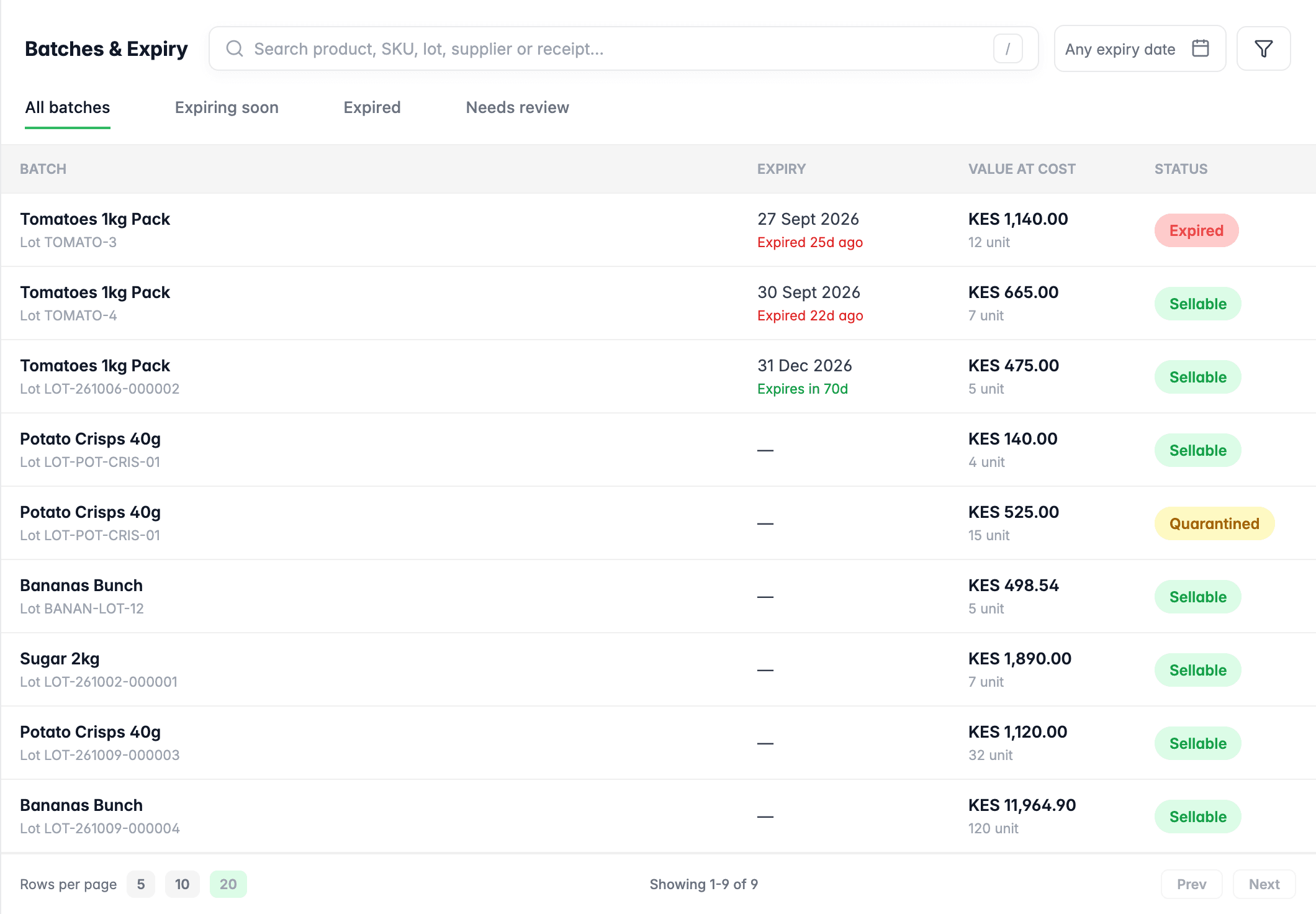
Minimarts sell a lot of dated goods: milk, yoghurt, bread, eggs, snacks, juice. Expired stock is a direct loss.
- Rotate stock so the first to expire is the first to sell.
- Check dates on delivery and refuse short-dated goods.
- Review what's about to expire every week, and discount it while it can still sell.
- Order perishables little and often.
3. Suppliers: buy smart, pay on time
Most minimarts deal with several suppliers: distributors, wholesalers, and local produce sellers. Keep it organised:
- Know your terms. Who gives you 7 days, 14 days, 30 days? Who wants cash on delivery?
- Check every delivery against the delivery note and invoice before signing.
- Track what you owe and when it's due, so you can plan cash and avoid surprises.
- Compare prices regularly. A few shillings difference per unit adds up across hundreds of units.
Read more: How to manage supplier debts and payments in your shop
4. Cash and M-Pesa: every shilling accounted for
With several staff handling money, you need clear processes:
- Separate logins for each cashier, so every sale is traceable.
- Cash up at the end of every shift, counting cash and checking M-Pesa separately against recorded sales.
- Never accept forwarded or screenshot M-Pesa messages as proof of payment.
- Bank regularly rather than keeping large amounts of cash in the shop.
Linking M-Pesa payments directly to sales in your POS removes most cash-up arguments. Read more: How to accept M-Pesa payments without the reconciliation headache
5. Staff: trust, but verify
Good staff are the difference between a minimart that runs itself and one that needs the owner there all day.
- Train everyone on how to sell, receive deliveries, and handle returns.
- Limit permissions. Cashiers sell; only managers give big discounts, void sales, or adjust stock.
- Review activity, such as voids, discounts and stock adjustments, regularly. It's not about suspicion; it simply keeps everyone careful.
- Rotate tasks like stock counts so no one person controls everything.
6. Credit customers: good for business, if controlled
Offering credit to regulars builds loyalty, especially with families, offices and nearby kiosks. But uncontrolled credit can sink a minimart.
- Give credit only to named customers with a phone number.
- Set limits and due dates, and stick to them.
- Stop new credit for customers who are overdue.
- Follow up before the due date, not weeks after.
Read more: How to keep track of customers who buy on credit
7. Expenses and profit: know what you really make
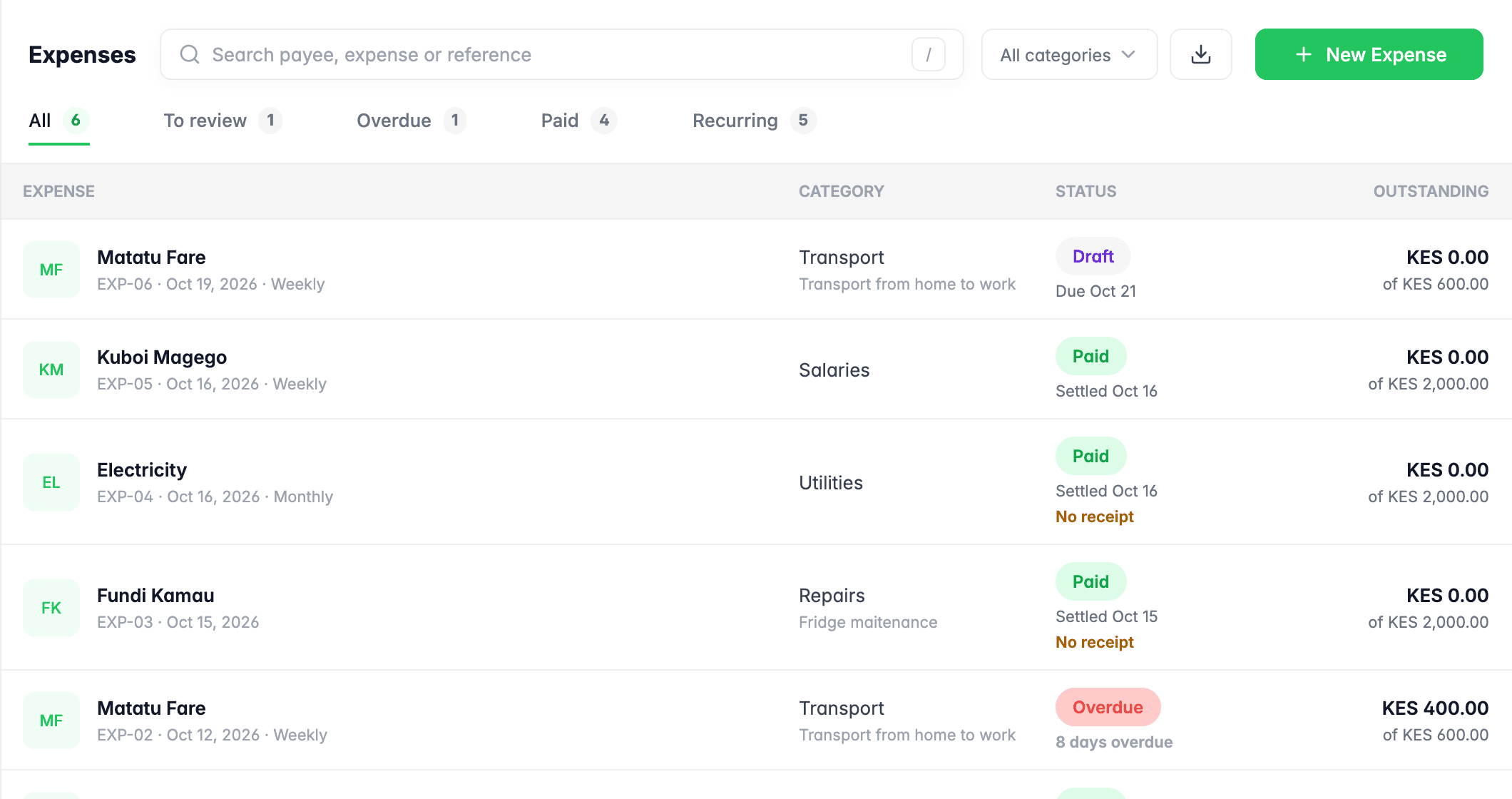
A busy minimart isn't automatically a profitable one. Record every expense: rent, salaries, electricity, transport, security, licences, airtime. Then look at gross profit (sales minus cost of goods) and subtract your expenses to see your real net profit.
Read more: Your shop is making sales, but are you actually making profit?
8. Routines that keep it all on track
Most problems in a minimart come from small things left undone. These routines help:
Daily
- Open and close each cashier's shift; count cash and check M-Pesa
- Receive and record deliveries
- Check fresh produce and dairy for quality and dates
- Note anything that ran out
Weekly
- Review low-stock items and place orders
- Spot-check high-value items
- Check what's about to expire and discount it
- Follow up on credit customers who are due
- Plan supplier payments for the coming week
Monthly
- Review sales, gross profit and margin
- Add up expenses and calculate net profit
- Review slow-moving stock
- Do a cycle count of a section of the shop
- Check supplier balances against their statements
9. When to move from notebooks to a POS
Many minimarts start with a notebook or spreadsheet. That works for a while, but once you have several staff, hundreds of products and multiple suppliers, the records fall behind. Signs it's time to switch:
- You don't know your stock levels without counting
- Cash-ups regularly don't balance
- You can't tell which products make the most profit
- Credit and supplier balances live in different books
Read more:
- Excel vs POS software: which is better for your business?
- How to choose a POS system in Kenya
- How much does a POS system cost in Kenya?
The bottom line
Running a minimart well comes down to control: of stock, cash, staff, credit and costs. None of it is complicated on its own. The challenge is doing it consistently, every day. Build the routines, use tools that make them easier, and you'll spend less time chasing problems and more time growing the business.