
The shop is busy. Customers come in all day, the M-Pesa messages keep arriving, and the till looks healthy every evening. Yet at the end of the month there's barely enough to pay rent, restock and pay yourself.
If that sounds familiar, you're not alone. Many shop owners measure success by sales, but the number that keeps a business alive is profit. This guide explains the difference, shows you how to calculate both, and covers the most common places profit leaks away.
Sales, gross profit and net profit
Three numbers matter, and they're often confused:
Sales (revenue)
Everything customers paid you. If you sold 100 sodas at KES 85, your sales are KES 8,500.
Gross profit
What's left after you subtract what the goods cost you.
Gross profit = sales − cost of goods sold
If each soda cost you KES 60, your cost of goods is KES 6,000 and your gross profit is KES 2,500.
Net profit
What's left after you also pay all your running costs: rent, salaries, electricity, transport, licences and so on.
Net profit = gross profit − expenses
If your expenses for the same period were KES 2,000, your net profit is just KES 500.
This is why busy shops can still struggle. KES 8,500 of sales turned into KES 500 of real profit.
What is margin, and why does it matter?
Gross margin is gross profit as a percentage of sales:
Gross margin = gross profit ÷ sales × 100
In the soda example: 2,500 ÷ 8,500 × 100 = 29%.
Margin tells you how much of every shilling you keep. It also lets you compare products fairly. A product that sells a lot at a 5% margin may earn you less than a slower product at 35%.

Look at the best sellers in the example above. Sugar brings in good revenue, but at about a 21% margin it earns far less per shilling than biscuits at about 35%. That's useful to know when deciding what to promote, where to place items, and how to price.
Mark-up is not margin
A common mistake: "I add 30% to my cost, so I make 30%." Not quite.
If an item costs KES 100 and you sell it for KES 130, your mark-up is 30%, but your margin is 30 ÷ 130 = 23%.
| Cost | Selling price | Mark-up | Margin |
|---|---|---|---|
| KES 100 | KES 120 | 20% | 16.7% |
| KES 100 | KES 130 | 30% | 23.1% |
| KES 100 | KES 150 | 50% | 33.3% |
If you plan your prices on mark-up but your costs are calculated on margin, you'll consistently think you're making more than you are.
Seven places profit leaks away
1. Not knowing your real costs
Supplier prices change all the time. If your selling prices don't change with them, your margin shrinks without you noticing. Record the cost price on every delivery so your profit figures stay accurate.
2. Stock losses
Expired goods, breakages, theft and unrecorded sales all come straight out of profit. A shop with a 30% margin has to sell about KES 3,300 of extra goods just to make up for KES 1,000 of lost stock. Regular stock takes show you how much you're losing and why.
3. Uncontrolled discounts
Small discounts given by staff without approval add up. Track who gives discounts and how much.
4. Credit that isn't collected
A sale on credit isn't profit until the money arrives. Debts that are never collected are pure loss. See how to keep track of customers who buy on credit.
5. Expenses you don't track
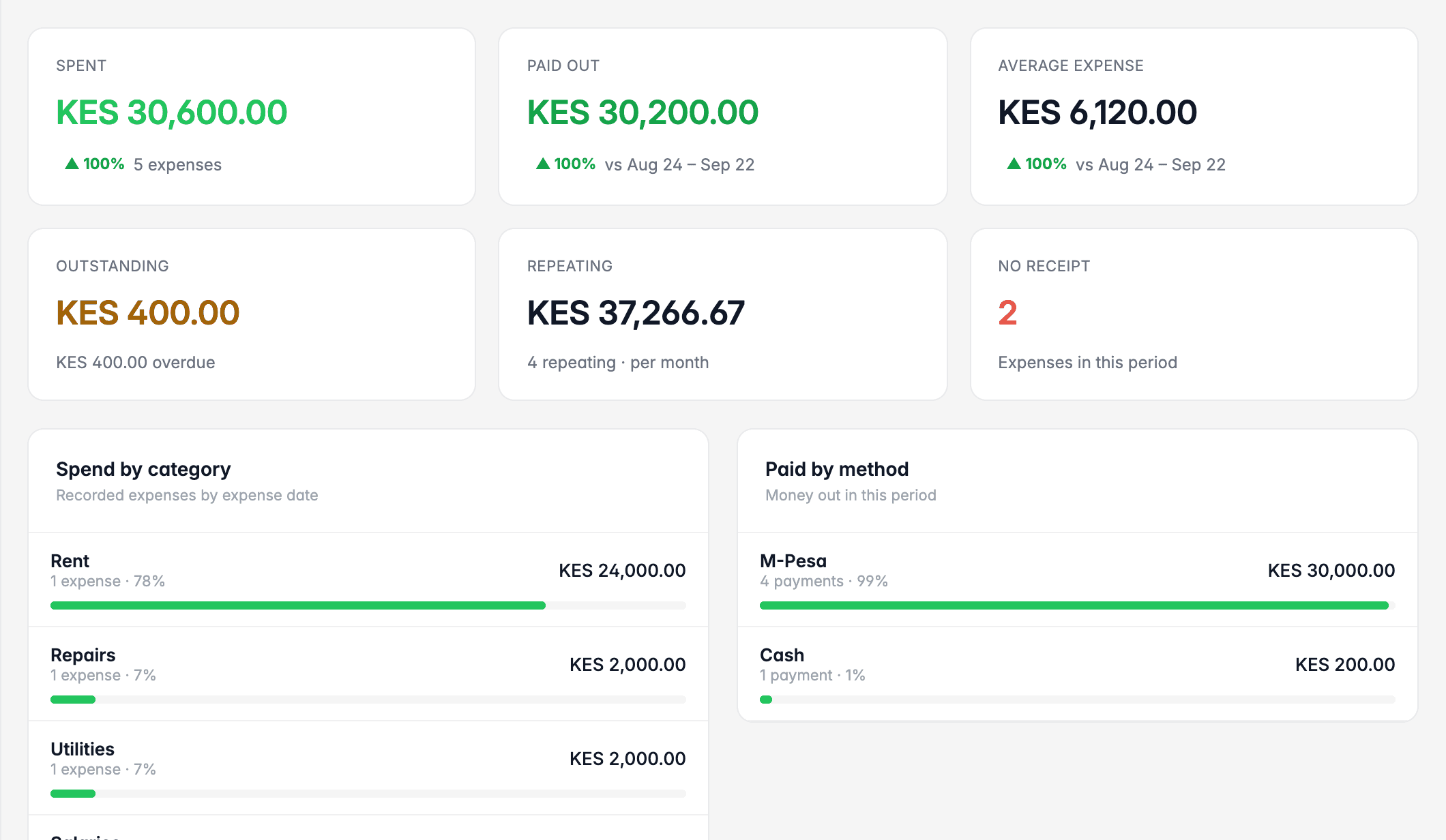
Small daily payments like transport, airtime, casual labour and "small things for the shop" often go unrecorded. They're real costs, and they eat net profit.
6. Paying suppliers late or twice
Late payments can cost you supplier discounts or goodwill. Paying an invoice twice is money gone. A clear record of supplier bills and payments prevents both.
7. Mixing business and personal money
If you take stock or cash for home without recording it, your profit numbers will never add up. Pay yourself a set amount and record anything you take.
How to check your profit every month
You don't need an accountant to get a clear picture. At the end of each month:
- Total sales: from your POS or sales book.
- Cost of goods sold: the cost price of everything you sold. A POS that records cost prices calculates this for you as gross profit.
- Total expenses: rent, salaries, utilities, transport and everything else.
- Net profit: gross profit minus expenses.
- Compare with last month. Did margin go up or down? Did expenses grow faster than sales?
FaidaPOS shows gross profit and margin in its analytics and records your expenses separately, so you can do this calculation in minutes.
Quick wins to improve profit
- Review prices against current costs every time a supplier price changes.
- Promote high-margin products: better shelf placement, bundles, or suggesting them at the counter.
- Cut losses before chasing sales: reducing waste is usually easier than finding new customers.
- Collect debts on time, and stop giving credit to customers who are already overdue.
- Watch your expenses monthly, especially the small ones.
The bottom line
Sales tell you how busy you are. Profit tells you whether the business is working. Know your margins, track every cost, and check your numbers every month, and you'll know whether all that activity at the till is actually paying off.
If you're still tracking all this in a notebook or spreadsheet, see Excel vs POS software for when it's time to switch.