
Almost every Kenyan shop sells on credit. The family down the road settles at month end, the office buys tea and sugar on account, a regular asks to pay on Friday. It's how relationships are built, and it keeps customers coming back to you instead of the shop next door.
But credit is also one of the fastest ways to run out of cash. A debt book full of small amounts can easily add up to tens of thousands of shillings, money you've already spent on stock and can't use to restock.
This guide shows you how to offer credit without losing control of it.
Why credit gets out of hand
Credit problems usually start small:
- Debts are written in a book that only one person understands, or in several books.
- Nobody agrees on what was bought. "I paid you last week" becomes your word against theirs.
- There are no due dates, so there's no clear moment to follow up.
- Credit keeps being given to customers who haven't paid the last amount.
- Following up feels awkward, so it doesn't happen.
The fix is a simple system with clear rules, applied the same way to everyone.
Step 1: Decide your credit rules
Write these down and share them with your staff:
- Who can get credit. Only regular customers you know, with a confirmed name and phone number.
- How much. A credit limit per customer, for example KES 2,000 for a family and KES 10,000 for an office.
- For how long. A standard period, such as 7 days, or payday at month end.
- Who can approve it. Maybe any cashier for small amounts, but only the owner or manager above a certain level.
- What happens when someone is overdue. No new credit until the old amount is cleared.
Clear rules make it easier to say no politely: "I'm sorry, the system won't let me give more until the last balance is cleared."
Step 2: Record every credit sale properly
Each credit sale should capture:
- The customer's name and phone number
- What they bought, item by item
- The amount and the date
- The due date
- Who served them
When credit is recorded as a proper sale linked to the customer, your stock stays accurate and there's no argument later about what was taken.
FaidaPOS records credit as a pay-later sale. The owner decides whether pay-later is allowed, sets a default pay-later period that prefills the due date at checkout, and can require a manager's approval before any pay-later sale goes through.
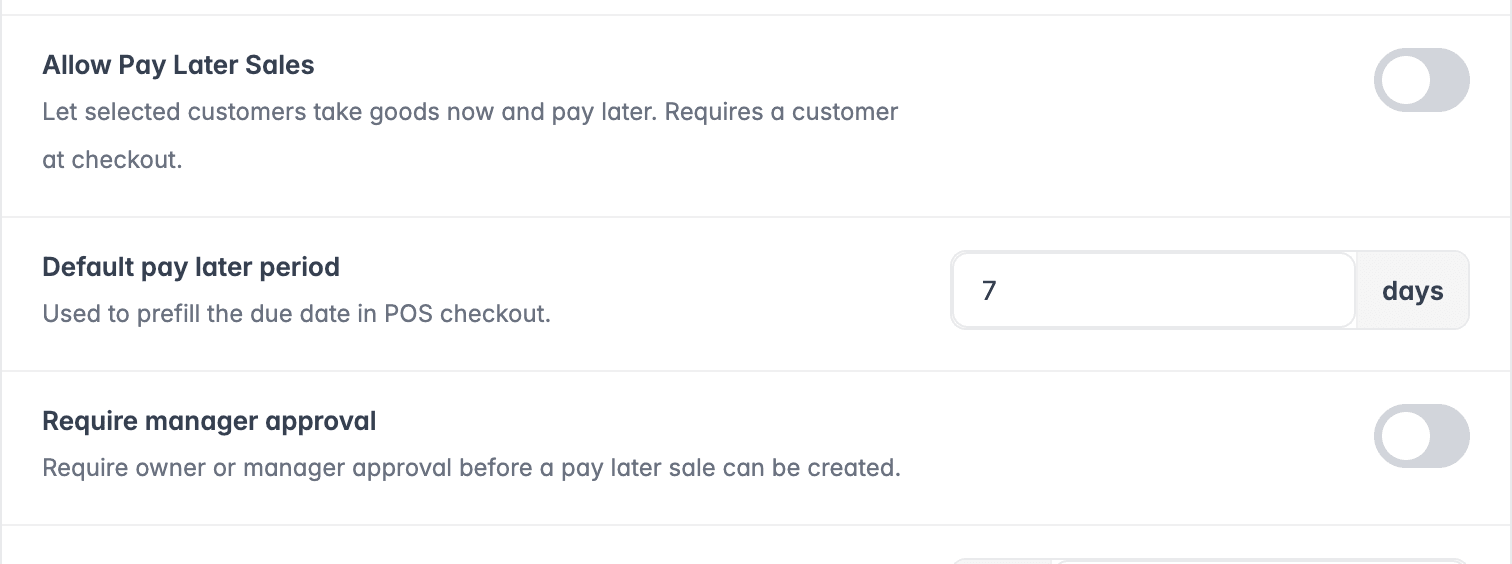
There's also a setting to block overdue customers, which stops new pay-later sales for anyone who already has an overdue balance. That enforces your most important credit rule without anyone at the counter having to argue.
Step 3: Keep one list of who owes what
You should be able to answer, at any moment:
- Who owes you money?
- How much does each customer owe?
- How much of it is overdue?
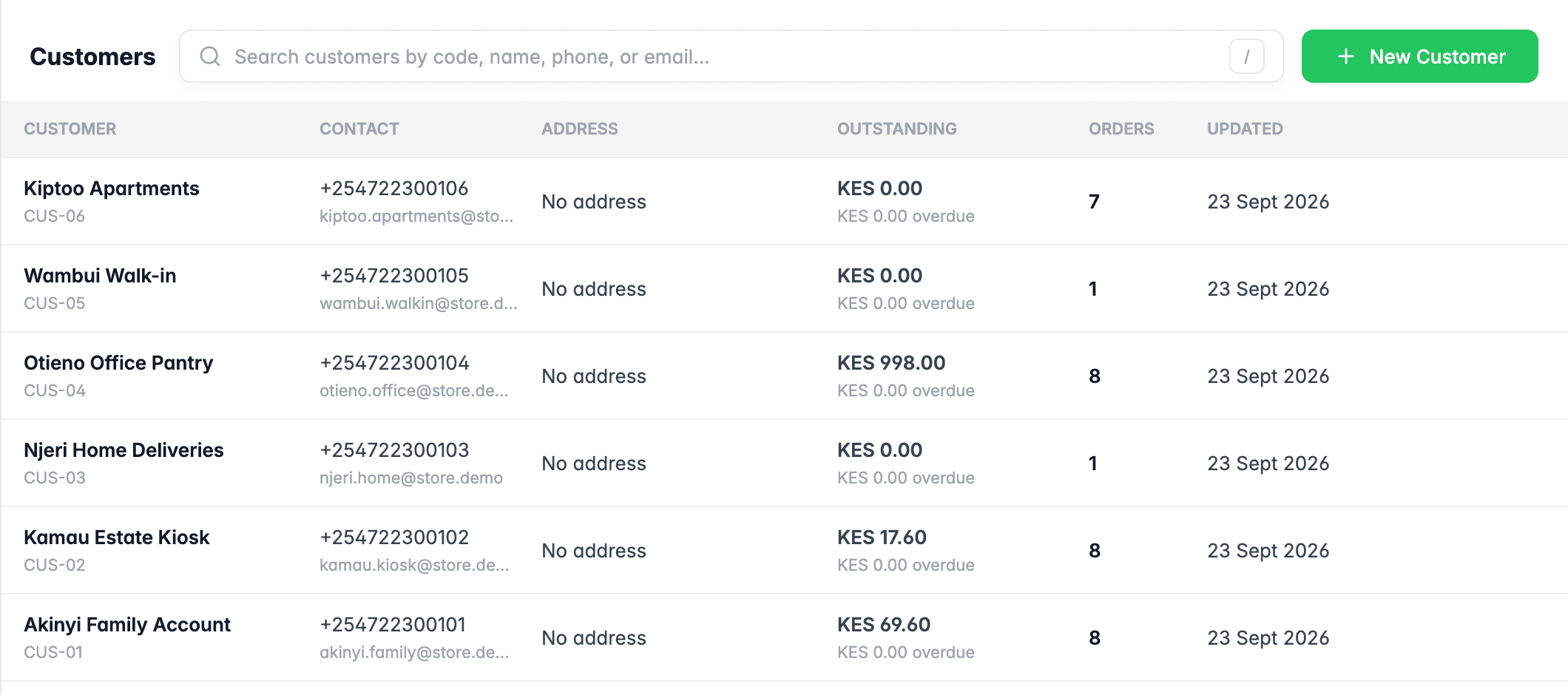
Open any customer to see their balance, overdue amount and contact details in one place, which is handy when they come in or when you call to follow up.

Step 4: Follow up before it's late
The best time to remind someone is just before the due date, not three weeks after.
- A day or two before: a friendly SMS or WhatsApp. "Hi Mama Akinyi, just a reminder your balance of KES 1,450 is due on Friday. Thank you!"
- On the due date: a polite reminder with the amount.
- After a week overdue: a call, and pause further credit.
- After a month: a direct conversation about a payment plan.
Stay polite and specific. Most customers aren't avoiding you; they just forgot, or their payday moved.
Step 5: Record payments, including part payments
When a customer pays, record it against their balance straight away, including part payments. Give them a receipt or a message showing the new balance. This avoids the classic "but I paid you!" dispute.
Encourage M-Pesa for credit repayments. Every payment then has a transaction code you can refer to.
Step 6: Review your credit book every week
Once a week, look at:
- Total credit outstanding. Is it growing faster than your sales?
- Overdue balances. Who needs a call this week?
- Repeat late payers. Should their limit be lowered, or credit stopped?
As a rule of thumb, if your total outstanding credit is more than a week or two of profit, it's time to tighten up.
Common mistakes to avoid
- Credit without a name. "The lady in the blue house" isn't a customer record.
- Letting staff give credit freely. Set limits on who can approve credit and how much.
- No due dates. Without one, there's never a "late".
- Writing off debts silently. If you decide not to collect, record it. It affects your profit.
- Mixing personal favours with business credit. Lending to friends and family is fine; just record it like everyone else.
The bottom line
Credit can be a strength for your shop, as long as it's controlled. Set clear rules, record every credit sale against a named customer, follow up on time, and review your balances weekly. Your loyal customers will keep coming back, and your cash will keep coming in.
Credit is one side of the story; what you owe suppliers is the other. See how to manage supplier debts and payments, and for how credit affects your bottom line, read sales vs profit.